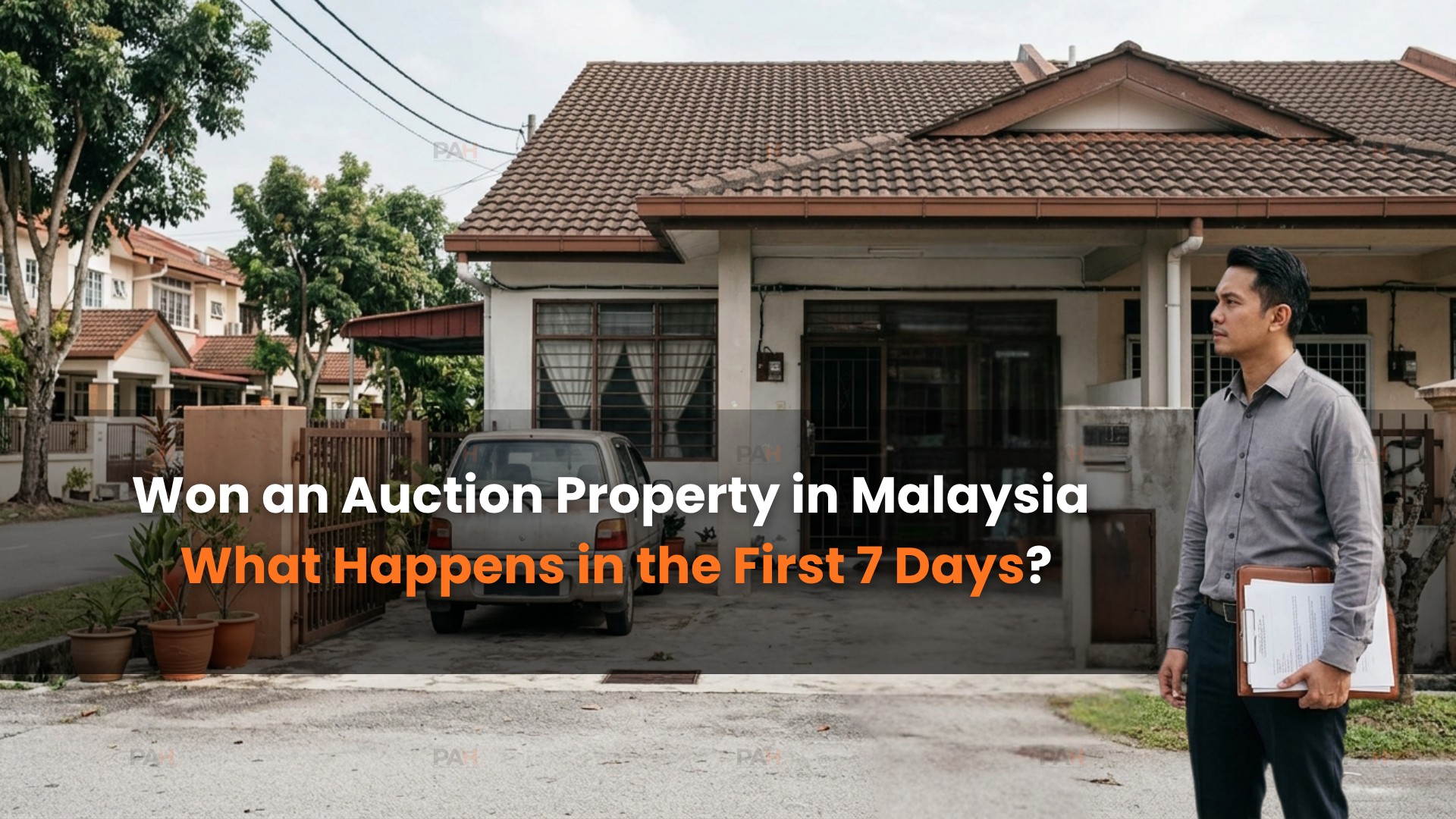
Is Auction Property Suitable for Cash Buyers Only?
A persistent myth surrounding the Malaysian auction (Lelong) market is that it is an exclusive playground for the ultra-wealthy. Because auction timelines are famously unforgiving and properties are sold strictly "as is where is," many first-time investors assume that you must buy Lelong properties entirely with liquid cash.
So, is auction property suitable for cash buyers only? The definitive answer is no. While cash buyers certainly hold a distinct advantage in terms of speed and risk reduction, the vast majority of successful Lelong transactions in Malaysia are actually financed through standard commercial bank loans.
However, financing an auction property requires a vastly different strategy than securing a loan for a subsale or under-construction unit. Here is an authoritative breakdown of the cash versus loan dynamic, and how financed buyers can safely navigate the Lelong market.
1. The Undeniable Cash Buyer Advantage
It is important to acknowledge why cash buyers love the Lelong market. Buying a property without bank financing eliminates the three biggest risks of property auctions:
Zero Valuation Gap Risk: Cash buyers do not rely on a bank’s Margin of Financing (MOF). If they get caught in a bidding war and pay RM600,000 for a property the bank only values at RM500,000, it does not matter. They fund the purchase themselves.
Immunity to Bank Rejections: Cash buyers do not need to worry about their Debt Service Ratio (DSR), CCRIS reports, or changing Base Lending Rates (BLR).
Guaranteed Deadline Compliance: The legal deadline to settle a Lelong property is 90 days (LACA) or 120 days (Non-LACA). Cash buyers can simply issue a bank draft to the assignee bank within weeks, entirely bypassing the slow, bureaucratic bank disbursement process.
2. The Reality for Financed Buyers: The 90/120-Day Race
For investors utilizing bank loans—which is the standard approach for maximizing cash-on-cash return—the Lelong market is highly accessible, provided you understand the rules of the race.
When you win an auction and sign the Memorandum of Sale (MOS), the 90 or 120-day countdown begins immediately. Your challenge as a financed buyer is to secure loan approval, finalize the loan agreement, and push the bank to disburse the 90% balance before this deadline expires. If the bank is delayed by even a single day and no Extension of Time (EOT) is granted, your 10% deposit is completely forfeited.
3. How Financed Buyers Can Guarantee Success
To compete safely alongside cash buyers, financed investors must proactively engineer their financing strategy before the auction begins.
The Pre-Approval Imperative: Never bid without a bank pre-approval. You must know your exact borrowing capacity based on your current DSR.
The 20% Cash Buffer Rule: While you are getting a 90% loan, you must never enter an auction with only the 10% deposit. Professional financed buyers prepare a 15% to 20% liquid cash buffer. This covers the initial deposit, legal fees, and acts as a financial shield if the bank's independent valuation comes in lower than the Successful Bid Price.
Aggressive Conveyancing: Financed buyers cannot use slow or passive lawyers. You must appoint a conveyancing lawyer who specializes in auction properties to actively push the bank and the Land Office to meet the strict disbursement deadlines.
Secure Your Financed Investment with Property Auction House
Whether you are deploying liquid capital or leveraging commercial bank loans, entering the Lelong market without professional guidance is a high-risk gamble. A single delay in financing can trigger catastrophic deposit forfeiture.
Navigating the strict deadlines and legalities of the Lelong market can be daunting. As your premier advisor, Property Auction House offers comprehensive consultation to simplify the entire process. Guided by international professional standards, we assist you at every stage—from property curation and bidding strategies to managing complex loan documentation. We ensure your investment journey is secure, seamless, and highly rewarding.
Operating strictly on a transparent, we eliminate the unpredictability and conflict of interest inherent in traditional commission-based brokering. Our expert team conducts rigorous pre-auction due diligence, securing indicative bank valuations and connecting you with aggressive, auction-specialized conveyancing lawyers. Partner with us to leverage the bank's money safely and build your BMV portfolio with absolute strategic certainty.
Frequently Asked Questions (FAQ)
Q1: Do I get a discount on the auction property if I buy it entirely in cash?
A: No. The Lelong market does not offer "cash buyer discounts." The Successful Bid Price documented in the Memorandum of Sale (MOS) is final, regardless of whether you pay the balance via a bank loan or a direct cash transfer.
Q2: If my loan is rejected, can I switch to paying in cash to save my deposit?
A: Yes. If your housing loan application is unexpectedly rejected post-auction, but you have the liquid funds available, you can absolutely step in and pay the remaining 90% balance in cash before the 90/120-day deadline to successfully secure the property.
Q3: Is the 10% bidding deposit strictly cash, or can I use a credit card?
A: You cannot use a credit card, personal cheque, or cash notes. The 10% deposit must be presented in the form of a Bank Draft (Banker's Cheque) made payable to the specific assignee bank or the High Court, as detailed in the Proclamation of Sale (POS).
Q4: Can I use a personal loan to cover the 90% balance if my housing loan is slow?
A: While technically possible, it is highly unadvisable and difficult to execute. Personal loans have significantly higher interest rates and shorter tenures than mortgages. Furthermore, most banks cap unsecured personal loans at amounts far lower than what is required to purchase real estate in Malaysia.
Is auction property suitable for cash buyers only in Malaysia? Discover how financed buyers can safely secure Lelong bank loans, manage valuation gaps, and protect their capital with our fixed-fee advisory.